Even on the dark deep seafloor, where sunlight never reaches, there are places teeming with life. One is the hydrothermal vent, where hot water gushes out; the other is the cold seep, where fluid as cold as the surrounding water oozes up. Both look like oases in the deep, but they are quite different underneath. Let's compare them using an explainer (published in 2023, updated in 2024) and expedition photos from NOAA Ocean Exploration, part of the U.S. National Oceanic and Atmospheric Administration (NOAA).
What is the difference between vents and seeps
The first differences that stand out are temperature and how long each place lasts. A hydrothermal vent is an opening in the seafloor created by volcanic activity, from which water heated by magma emerges. NOAA describes vents as volatile and short-lived.
At a cold seep, fluid rich in hydrocarbons seeps up through cracks in the seafloor. Its temperature is about the same as the surrounding seawater. Seeps are relatively stable and long-lasting.
What is a hydrothermal vent like
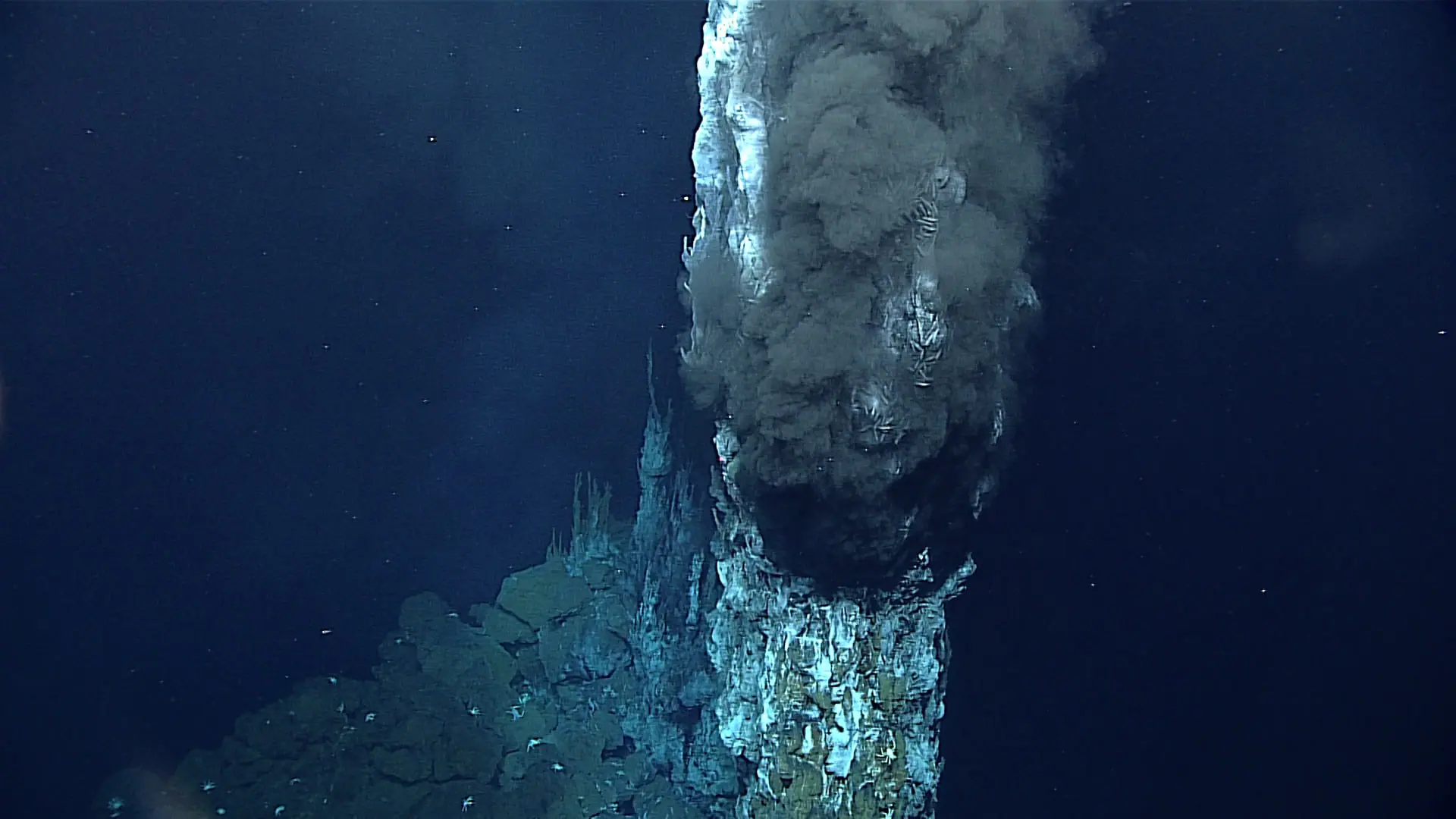
Just how hot a vent can be is clear from the "black smoker" in the main image. On the 11th dive of a 2016 expedition exploring the deep waters around the Mariana Islands, the team measured the fluid coming out of it at 339°C, while the surrounding seawater was only 2°C. This temperature difference makes minerals dissolved in the fluid come out of solution, building up chimney-like structures.
The table in NOAA's explainer describes vent fluids as "highly acidic" and above 400°C. Fluid temperatures differ from vent to vent, however; at the vent in the main image, the team measured 339°C. The black and white "smokers" are built by minerals that precipitate from the fluid. Vents also release gases containing hydrocarbons and hydrogen sulfide. Vents are found where tectonic plates are active, such as along mid-ocean ridges and the Pacific Ring of Fire.
What is a cold seep like
The fluid that seeps out often contains methane or hydrogen sulfide, and at some seeps oil comes out too. Cold seeps are not limited to tectonically active places such as the Cascadia Margin in the eastern Pacific. They also occur along passive, inactive continental margins, such as the U.S. Atlantic coast and the Gulf of Mexico.
Large communities of animals can form at cold seeps. The photo above shows Lamellibrachia tubeworms found at 2,018 m off Alaska during the 2023 Seascape Alaska 3 expedition; NOAA also uses this photo on its page introducing cold seeps. This "field" was at least 200 m wide, and based on a trail of bubbles detected while the team was mapping the seafloor, it is likely even larger.
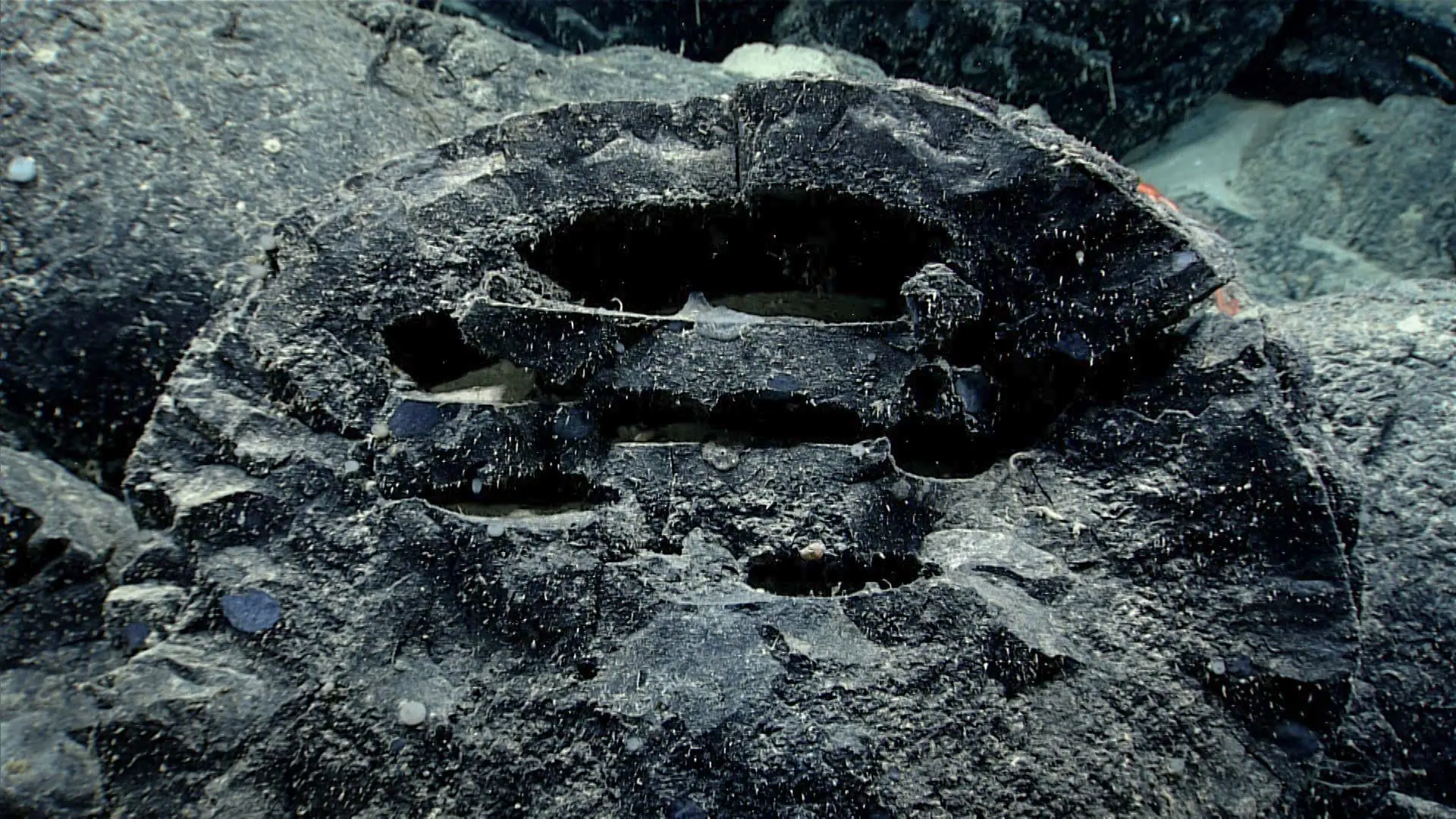
On the same dive, the team found three areas where smooth, ice-like white methane hydrate was exposed. The photo above shows one of them, with the hydrate attached to a carbonate rock overhang. That overhang was home to tubeworms, clams, anemones and crabs.
How can life thrive without light
What the two places have in common, despite their many differences, is that both ecosystems are driven largely by chemosynthesis. Chemosynthesis uses energy from reactions of inorganic chemicals, rather than sunlight, to make organic matter. Chemosynthetic bacteria form the base of the food chain, and some of them live symbiotically in or on animals. Low oxygen is another thing the two places share.
Another NOAA explainer notes that people first saw a hydrothermal vent on the deep seafloor in 1977. There, in a place with no sunlight, they found a thriving community of life.
Do the animals grow differently
Another difference NOAA points to is how fast animals grow: at cold seeps, organisms grow slowly and can live for a very long time. Tubeworms of the species Lamellibrachia luymesi found at a Gulf of Mexico seep were more than 200 years old and about 2 m long.
At vents, by contrast, organisms grow quickly. The giant tube worm (Riftia pachyptila) in the photo above is the fastest-growing marine invertebrate on Earth, adding a little less than 1 m in a year. The photo was taken at Tempus Fugit, a 120 m by 40 m vent field discovered on the Galápagos Rift in 2011.
Slow growth at long-lasting seeps and fast growth at ever-changing vents make for an interesting contrast. Deep Sea Log has also covered vent research in an article on vent fields off Iceland, and mid-ocean ridges, where many vents occur, in an article on Earth's longest mountain range.