Which deep-sea animal has the biggest teeth? NOAA Ocean Exploration, part of the U.S. National Oceanic and Atmospheric Administration (NOAA), says the answer depends on what "biggest" means. Relative to body size, it is the fangtooth. By the size of the tooth itself, it may be the narwhal.
Who has the biggest fangs for its size
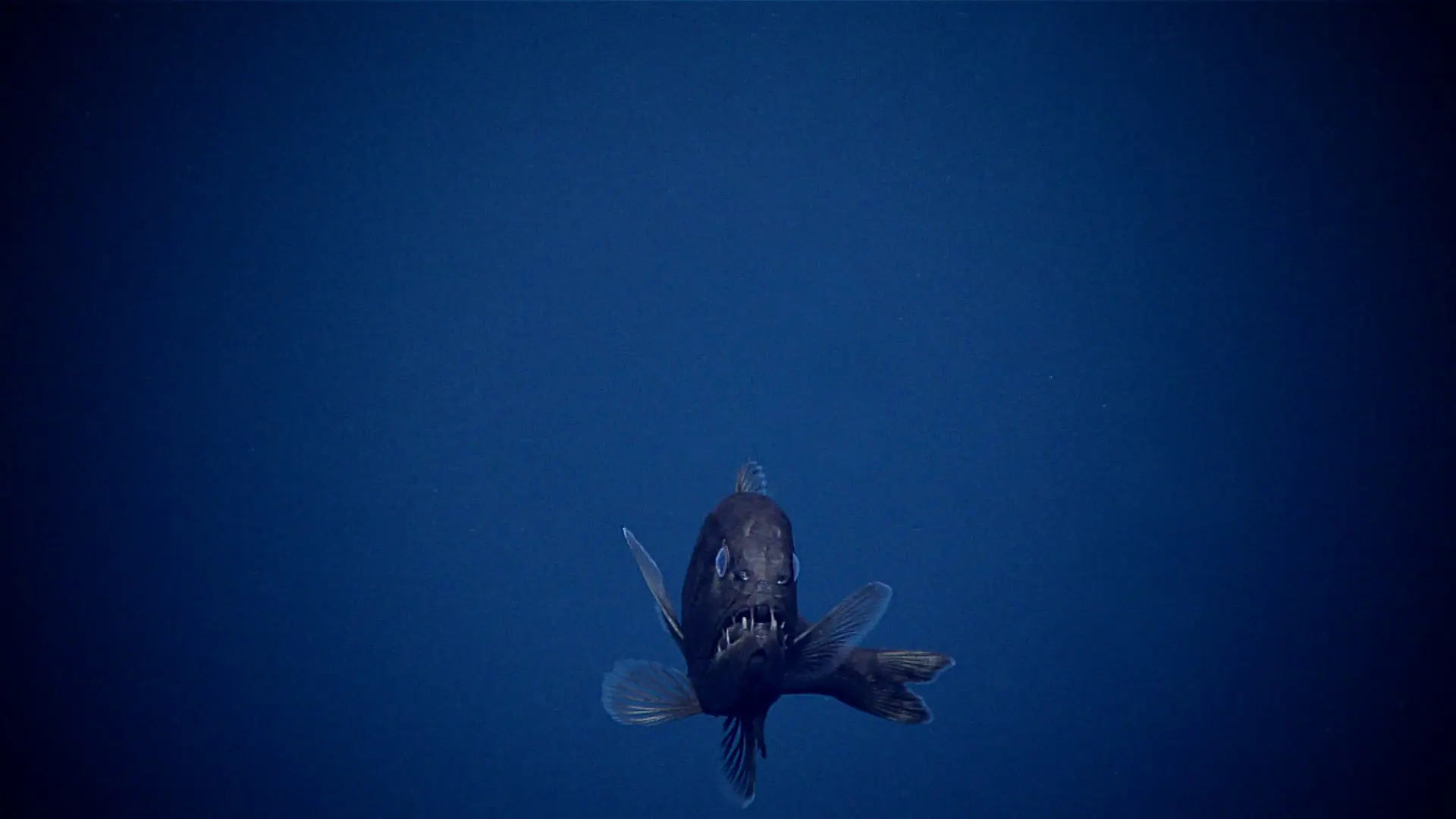
NOAA's pick is the fish whose teeth are the largest of any ocean animal relative to its body: the fangtooth (Anoplogaster cornuta). Yet this fish grows to only about 17 cm at most.
The fangtooth in the main image was photographed at a depth of 800 m during NOAA's 2017 expedition to the Musicians Seamounts. This fish spent some time examining the remotely operated vehicle (ROV) Deep Discoverer. Seen head-on, with long teeth lining its mouth, it certainly looks fearsome.
Why is size hard to judge in photos
In photos and videos, it is hard to judge the size of deep-sea animals, because there is usually nothing familiar in the frame to compare them with. NOAA writes that many deep-sea fish that look ferocious on camera are actually smaller than you might expect. The fangtooth is one of those "smaller than expected" fish.
How impressive are the fangtooth's fangs
The fangtooth's front teeth are so huge that they fit into special pockets in the roof of its mouth. Even so, its mouth cannot close completely. NOAA explains that long, sharp fangs are useful in the deep sea, where food can be scarce, because they let the fish seize a squid or other slippery prey whenever the chance comes.
Who has the biggest tooth overall
So who has the biggest tooth itself? NOAA says that, depending on how you measure, it may be the narwhal (Monodon monoceros). This whale dives to more than 1,800 m while hunting, and a male's single tusk can be nearly 3 m long.
NOAA also has a separate explainer on the narwhal (2015, updated 2020). It gives the length that protrudes from the upper jaw as 2 to 3 m, so even NOAA's own explainers express the tusk length a little differently. The narwhal has no teeth in its mouth; the male's tusk is a single straight tooth growing from the left side of the upper jaw. Females rarely have one.
The tusk is believed to be the origin of the unicorn legend, and the scientific name Monodon monoceros even means "one tooth, one horn." European whalers in the Arctic are said to have started the legend by bringing tusks home along with stories about the animals they came from.
How does the narwhal live
The narwhal is one of the deepest-diving marine mammals. It lives in Arctic waters and can spend long periods below 800 m. It eats Greenland halibut, cod species, shrimp and squid of the genus Gonatus, among other prey.
Still, not much is known about narwhals. They live in Arctic waters far from towns, in places that are dark for half the year and covered in ice for half the year, which makes them hard to study.
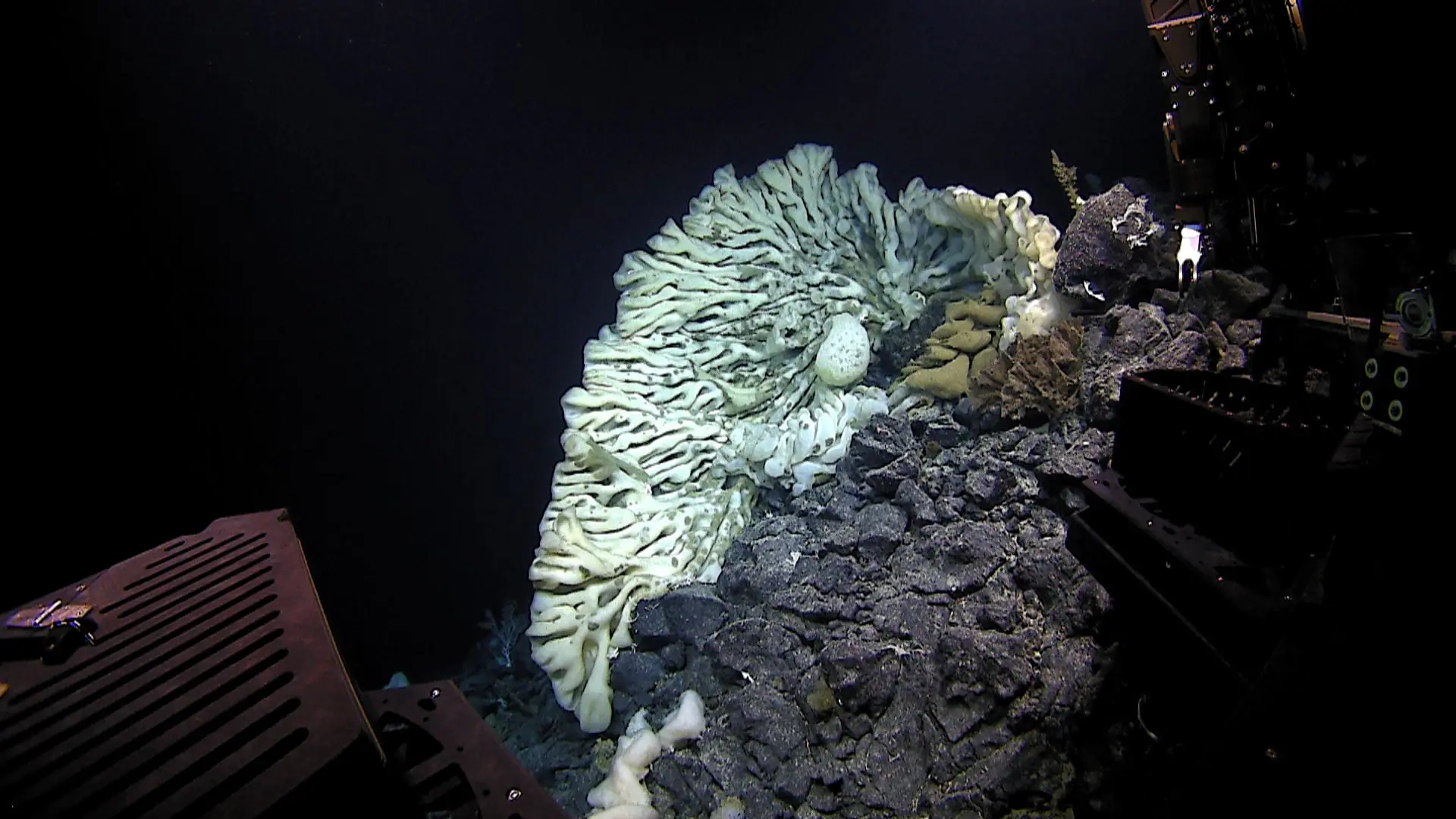
A small deep-sea fish's fangs and a whale's tusk nearly 3 m long: the answer to "the biggest tooth" changes with how you compare. For more deep-sea size records, see Deep Sea Log's article on the largest known sponge and our article on the deepest-living fish.