Some animals stride across the deep seafloor on thin legs splayed wide. They look just like spiders, yet these sea spiders, though related to spiders, are not true spiders. Drawing on an explainer from NOAA Ocean Exploration, part of the U.S. National Oceanic and Atmospheric Administration (NOAA), first posted in 2014 and revised in 2024, and on expedition photos, let's compare them with land spiders and find out what these "spiders that aren't spiders" really are.
How are they different from spiders
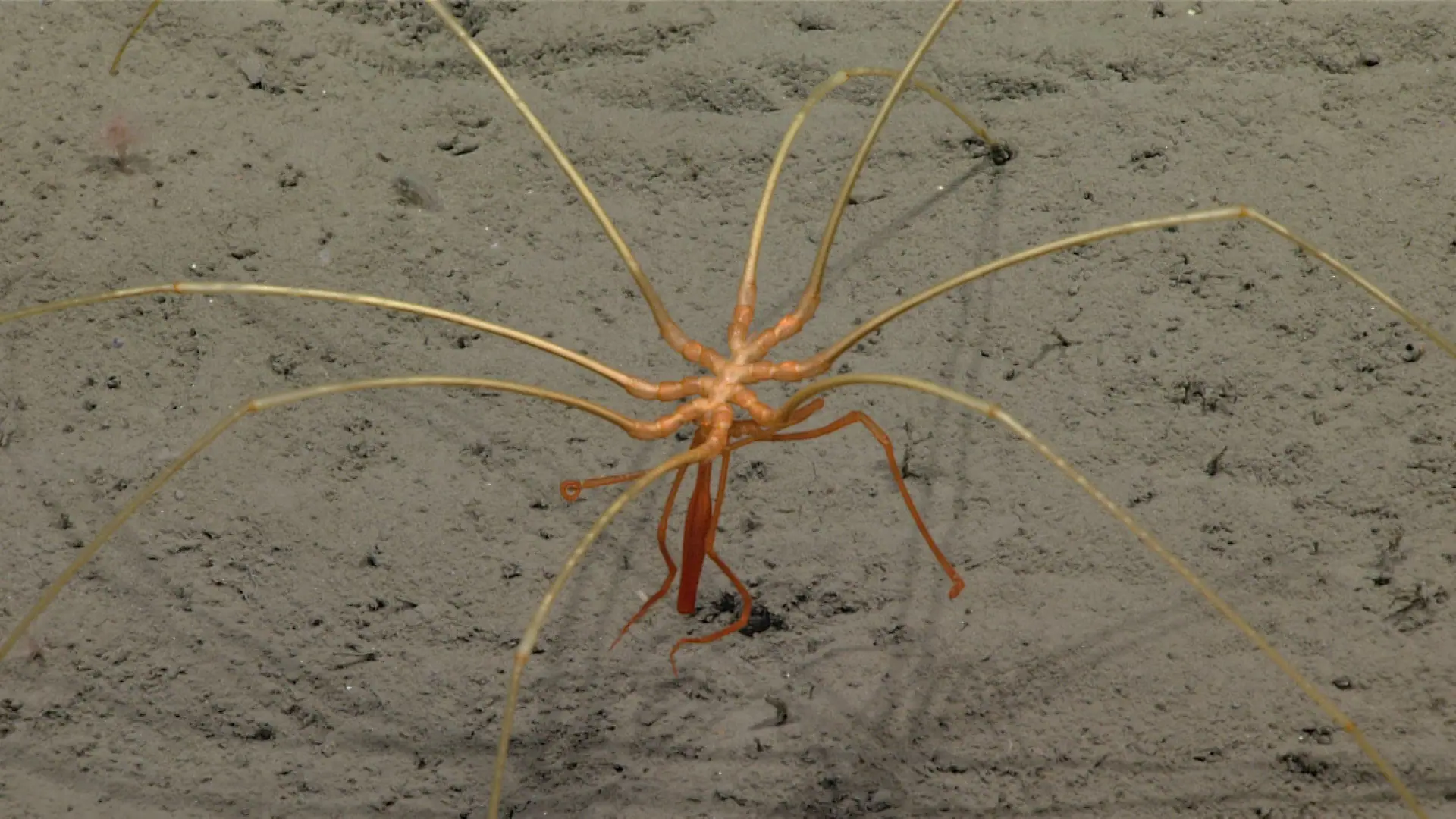
Sea spiders and spiders both sit within the large group of arthropods. What sets them apart is the class each belongs to. As NOAA explains, land spiders are placed in the class Arachnida, whereas sea spiders make up a class of their own, Pycnogonida. They are related, but a sea spider is a different animal from the spiders that gave it its name.
The main image shows a sea spider photographed in 2021 at 1,400 m in Hudson Canyon, off New York and New Jersey. Seeing only its legs spread over the sand, it would be easy to mistake it for a spider.
How is a sea spider's body built
In the close-up above, taken at 4,284 m, the body in the middle is astonishingly small, with long, slender legs radiating out from it. It suits the name of the sea spiders' order, Pantopoda, meaning "all legs." The legs, typically eight of them, serve for walking on the bottom as well as for swimming or treading water above it.
With a body this small, where do the internal organs go? According to NOAA's explainer, part of them extends right into the legs. There are no lungs either, but that is no problem: sea spiders take up oxygen across the exoskeleton covering the body. Some deep-sea sea spiders lack eyes.
What do they eat, and how
The sea spider in the photo above was clinging to an anemone on a bamboo coral branch, in the middle of a meal, at Shostakovich Seamount in the Musicians Seamounts north of the main Hawaiian Islands. Soft-bodied animals like anemones are typical prey. NOAA also lists bryozoans, hydroids, worms and corals. Most sea spiders are carnivores, though some eat algae as well.
Rather than biting, they feed by sucking. Through a tube-shaped mouth called a proboscis, they draw fluids out of their prey, and this mouth is frequently longer and larger than the rest of the body. A 2021 North Atlantic expedition recorded a large sea spider eating a coral at 2,375 m, and in 2017 one was filmed eating a cup coral on the southern ridge of Baker Island in the Pacific.
How do they care for their young
The white mass held at the center of the body in the photo above is young being carried by a male. It was seen during a 2019 expedition off the southeastern United States. Besides their walking legs, sea spiders have extra appendages used for grooming and courtship. Males use them to carry developing eggs, and sometimes the young as well.
NOAA explains that after the female's eggs are fertilized, the male carries them with dedicated appendages called ovigers, much as male seahorses carry eggs. The expedition video even shows a baby drifting away.
Where do they live, and how many are there
Two photos in this article show a depth: 1,400 m and 4,284 m. Yet sea spiders live not only in the deep sea but even in tide pools. Tide-pool sea spiders can be tiny enough to escape notice, while some on the deep seafloor grow beyond 50 cm (NOAA's explainer does not say what was measured). NOAA regards growing large in the deep as an important adaptation to that harsh environment. Some 1,500 species have been described, and they are especially common in the seas around the Arctic and Antarctic.
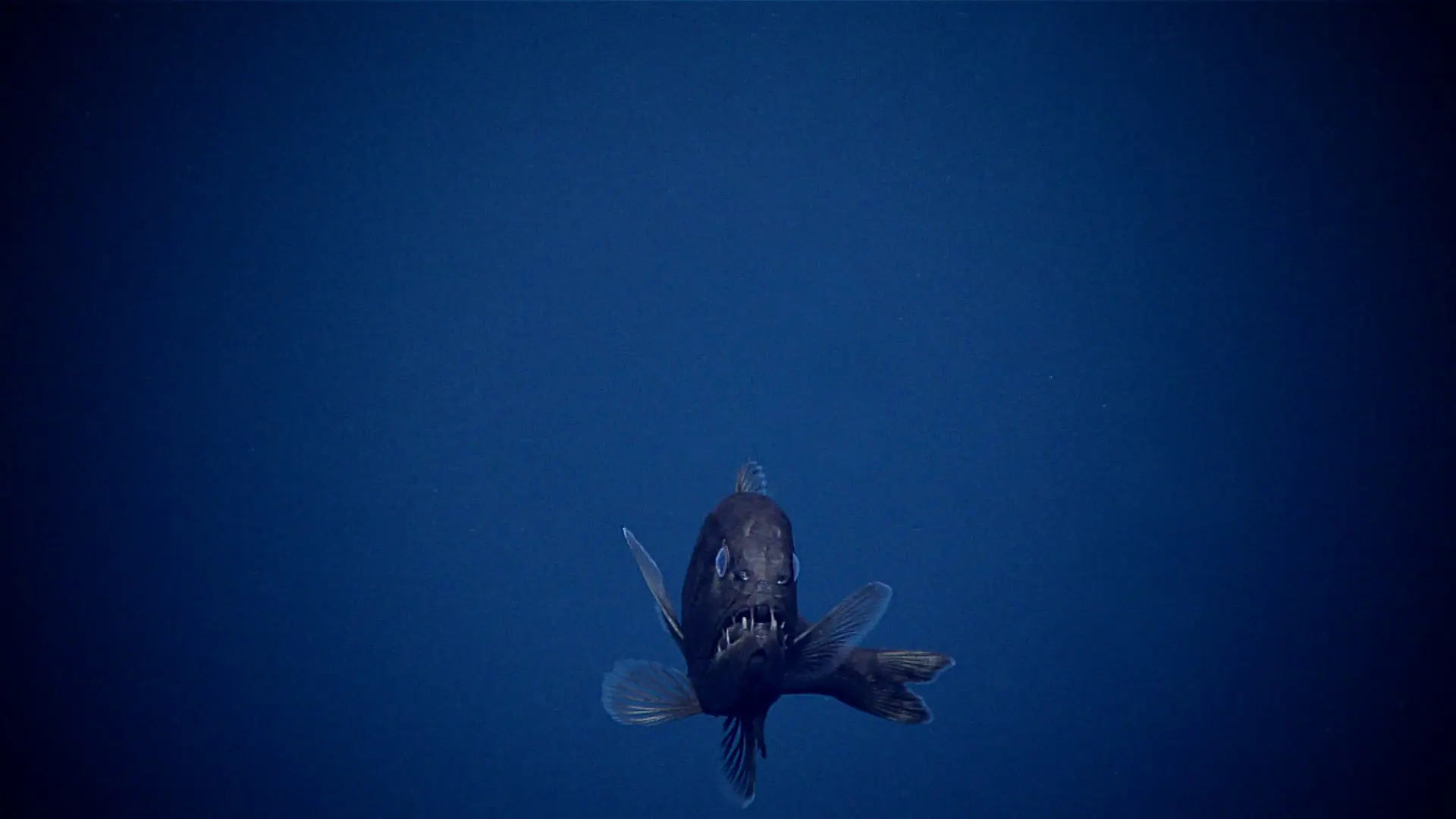
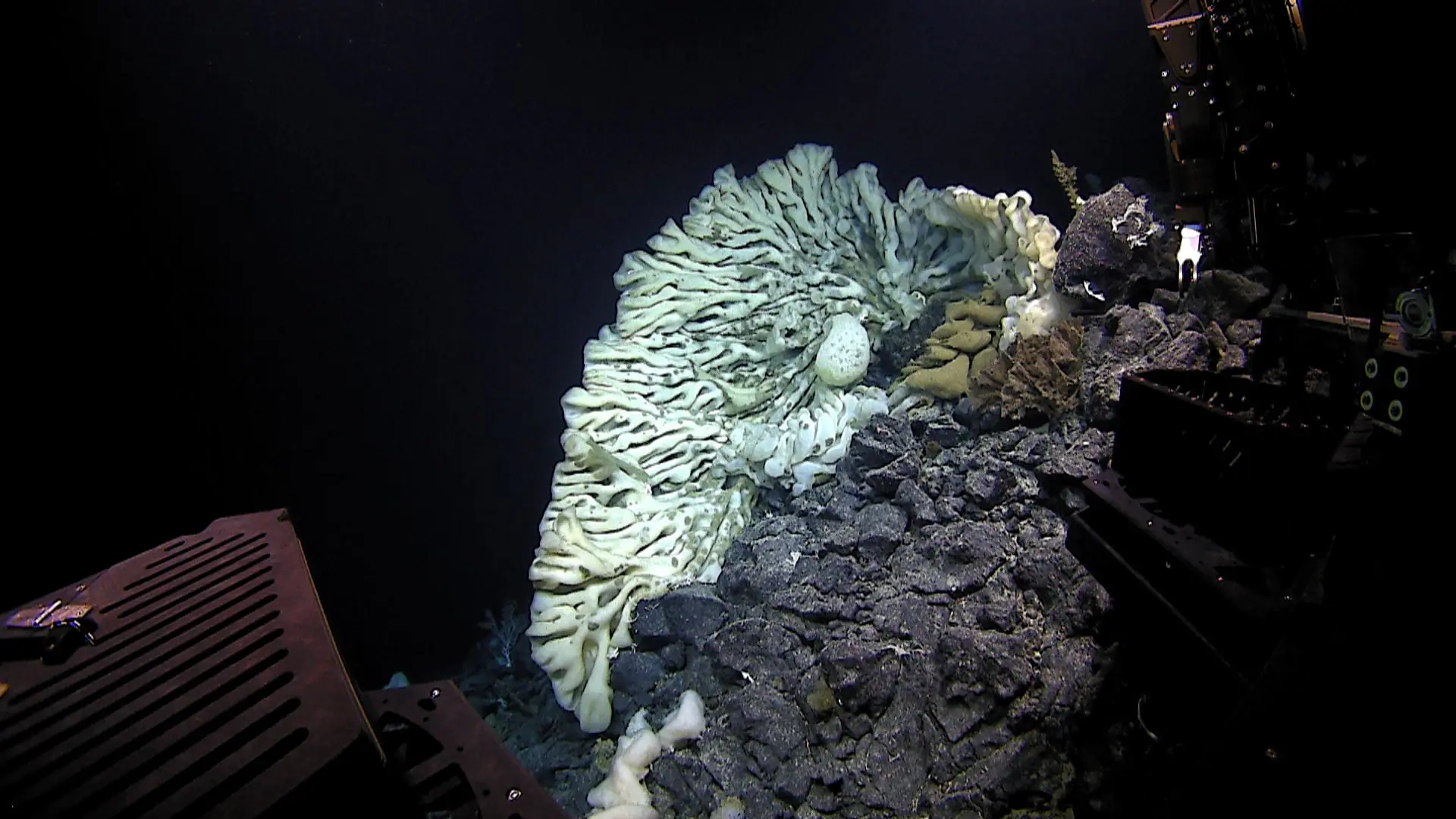
From shallow water to the deep, they live in every part of the ocean, yet NOAA writes that they have been little studied and much about them remains unknown. For the fangtooth, a deep-sea fish also seen at the Musicians Seamounts, see Deep Sea Log's article on the fangtooth. A giant sponge found in the deep waters of Papahānaumokuākea is featured in our article on the largest sponge.