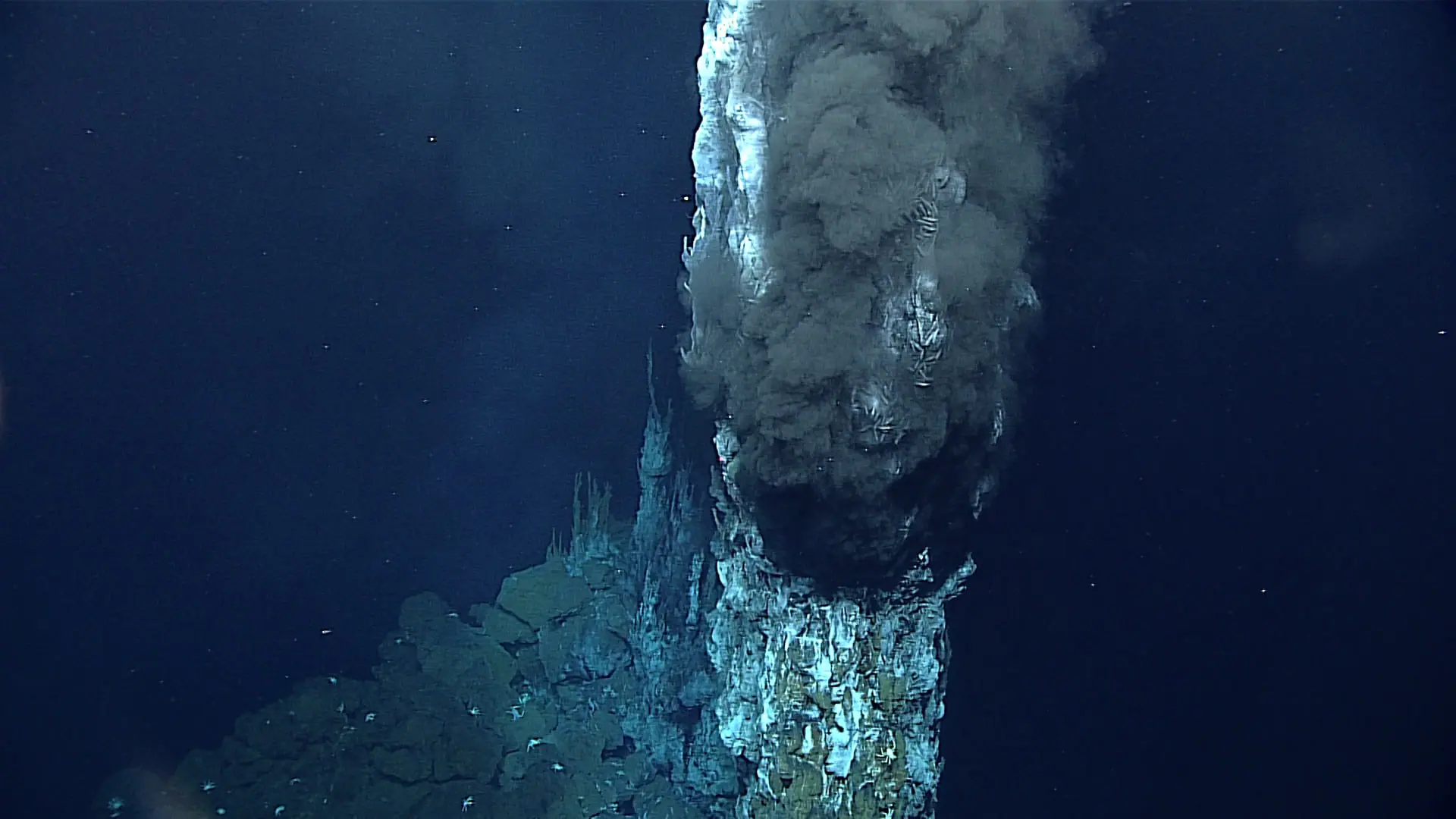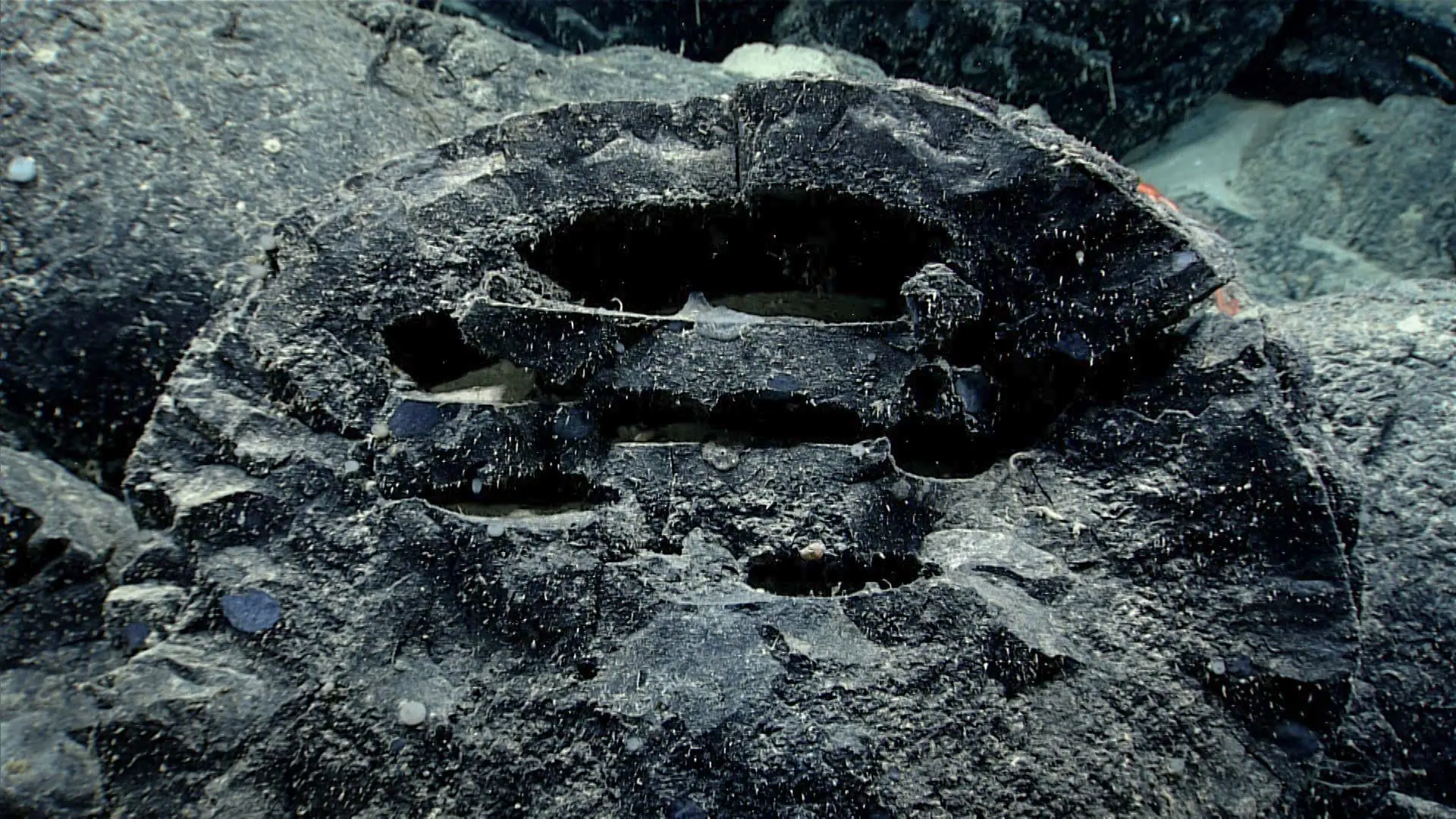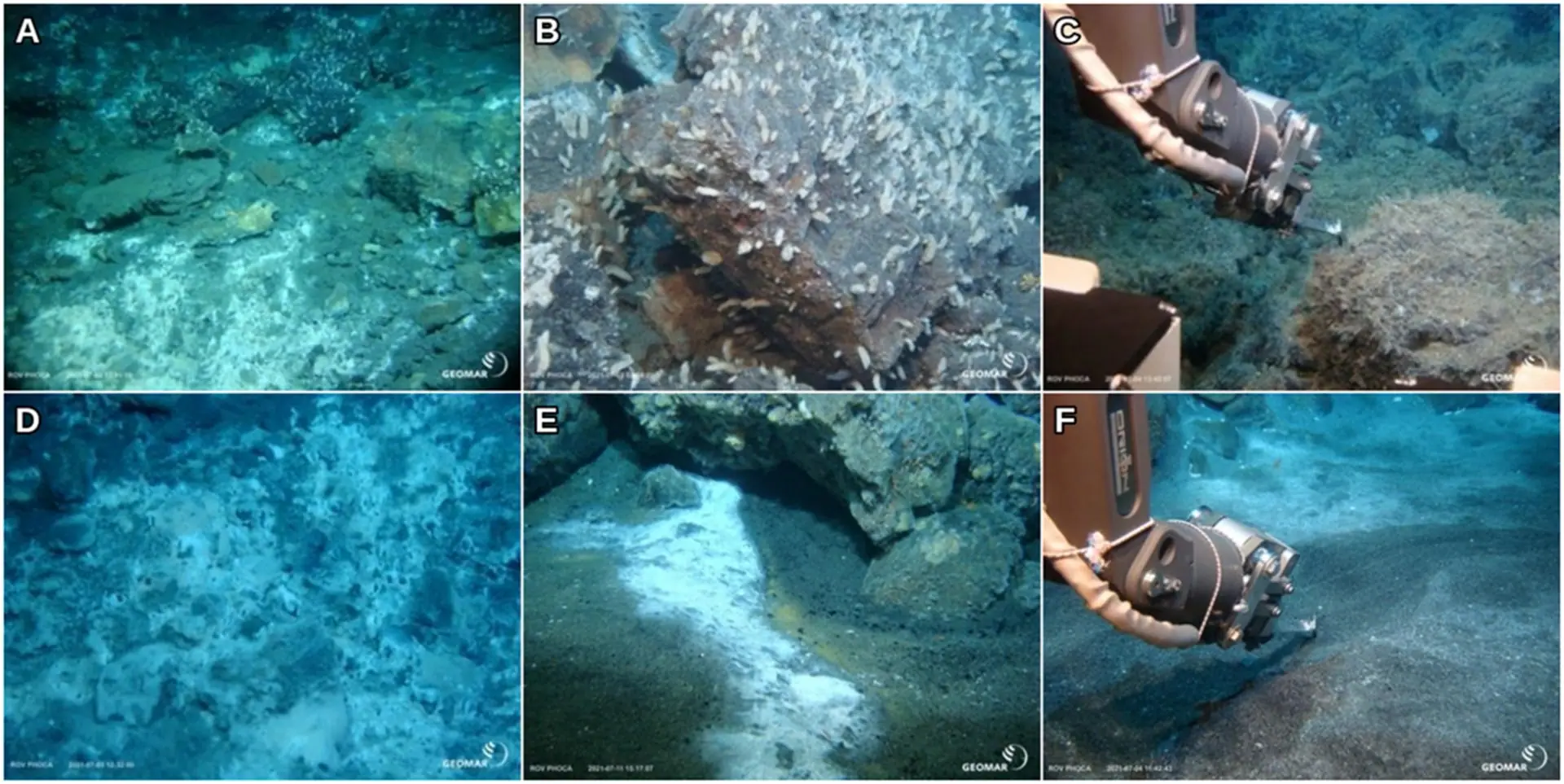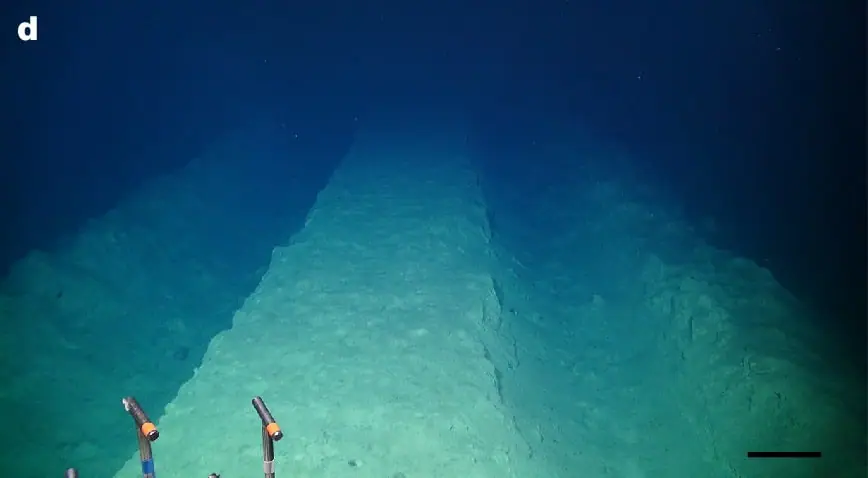
On the Pacific seafloor where the Ocean Minerals Company (OMCO) tested deep-sea mining in 1979, the mud in the tracks left by the mining machine still holds less organic matter than its surroundings, and of lower quality, 44 years later. Researchers from the University of Liverpool and partner institutions analysed sediment collected in 2023 at about 4,800 m in the Clarion-Clipperton Zone (CCZ) and published the results in the journal Elementa: Science of the Anthropocene on 2 November 2026. Organic matter is the main food of seafloor life, and the depletion appears linked to the scarcity of organisms in the tracks.
What was the OMCO mining test?
The site lies in the Clarion-Clipperton Zone, which stretches between Hawaii and Mexico, and the place where the Ocean Minerals Company ran its test is known as the OMCO site. The tracks of the 100-tonne mining machine are still visible on the seafloor.
The seafloor here is rich in polymetallic nodules containing rare metals used in batteries and touch screens, and interest in mining them is growing. Small animals that live on the nodules themselves in the same region are the subject of our article on the tiny animals counted in the crevices of polymetallic nodules.
The test is described in detail in a 2025 Nature paper by Daniel Jones and colleagues. It took place on 15–18 March 1979: a mining machine 9 m wide, 14 m long and 4.5 m high was lowered to the seafloor at around 4,700 m from the vessel Hughes Glomar Explorer. The machine travelled about 1 nautical mile (about 1.85 km) and disturbed roughly 0.4 km² of seabed.
What did the 2023 survey measure?
The sediment was collected by a team from SMARTEX (Seabed Mining and Resilience To EXperimental Impact), a UK research project. Over a month, they took samples in three areas: inside the machine's tracks, the surrounding area where resuspended sediment had settled, and an undisturbed control site. SMARTEX is led by Daniel Jones of the National Oceanography Centre (NOC) and Adrian Glover of the Natural History Museum in London. According to the 2025 paper, the expedition sailed on the British research ship RRS James Cook from 14 February to 12 March 2023.
Particulate organic matter in the sediment is a vital food for animals living on and in the seafloor, supplying nutrients such as omega-3 fatty acids that support growth and reproduction. The paper's abstract describes it as the primary food source for animals on abyssal plains 3,000 to 6,000 m deep. To compare quality as well as quantity, the team measured carbon and nitrogen content, stable carbon and nitrogen isotopes, and lipid biomarkers.
How did the mud differ 44 years later?
In the mining tracks, both the quantity and the quality of organic matter were lower than in the surrounding area, and they varied more from place to place. The abstract adds that particle size distributions differed between the tracks and their surroundings. The organic matter patterns were linked to particle size.
The team also compared the organic matter with the numbers of foraminifera, xenophyophores and large animals (megafauna). Xenophyophores are large single-celled organisms on the seafloor; the 2025 paper counted those wider than 2 cm from photographs. Densities of these organisms were higher at the control and plume sites, where organic matter quality was highest. The paper takes this as a sign that organic matter quality may play a key role in shaping the community. Dr Rachel Jeffreys, a marine biologist at the University of Liverpool and the study's lead author, said:
Our study provides long-term evidence of changes in organic matter following a major disturbance to the seabed. Remarkably, we can still detect the effects of a mining test 44 years after it took place.
— Rachel Jeffreys (University of Liverpool, lead author)
What was already known in 2025, and what is new?
The 2025 Nature paper had already reported on the organisms at the same site: impacts persisted in many groups, but several, including sediment macrofauna, mobile deposit feeders and even large sessile animals, had begun to re-establish. The new paper goes further into the organic matter that feeds them, looking at its quality as well as its quantity.
| 2025 paper (Nature) | 2026 paper (Elementa) | |
|---|---|---|
| Main focus | Shape of the tracks, numbers and kinds of organisms, sediment properties | Quantity and quality of particulate organic matter in the sediment |
| Organism densities | Large animals on the tracks: fewer than 0.1 individuals per m², against a mean of 0.33 at the control site and 0.28 before the test | Densities higher at the control and plume sites, where organic matter quality was highest |
| Sediment organic matter and particles | Where nodules were removed: similar grain size, organic carbon generally lower and more variable | Particle size distributions differ; organic matter lower in quantity and quality, also compared with isotopes and lipid biomarkers |
| Plume area | Surface organic matter similar to the control site | High organic matter quality, with higher organism densities |
The 2025 paper also noted that organic matter appeared to collect in the furrows left by the machine's propulsion, attracting mobile deposit-feeding animals. Conditions inside the tracks seem to vary considerably from spot to spot. On particle size, the two papers differ: the 2025 paper found similar grain size, while the new paper reports different size distributions.
What happens if commercial mining begins?
The researchers say assessments of deep-sea mining should take into account long-term changes in the quantity and quality of sediment organic matter. Jeffreys explained what such changes could mean:
Changes in the quantity and quality of organic matter could affect the food available to organisms living on the seafloor and, in turn, influence how ecosystems recover from disturbance.
— Rachel Jeffreys (University of Liverpool, lead author)
Scale matters too. The 2025 paper cites estimates that a commercial operation would mine roughly 400 km² a year for 20 years. That is about 1,000 times the 0.4 km² disturbed by the 1979 test, every year. That even a small test track has not recovered after 44 years offers a clue to the impact of mining at scale. Deep-sea mining was also raised as a concern in the release on the biological clock of a vent mussel.
From the editors
We could not connect to the publisher's site, so we were unable to read the full paper. We were limited to the release and the abstract, which is why this article gives no figures for how many cores were taken at how many sites, or for how much the organic carbon values differed.
The release puts the depth at about 4,800 m, around 100 m more than the depth at which the 2025 paper says the machine was lowered (about 4,700 m). Both are approximate, and the sampling points need not match the point where the machine went down. The 2025 paper says the collection tracks look similar to those made by most modern collectors, but the 1979 machine's Archimedes-screw propulsion dug much deeper into the seafloor than modern tracked vehicles. The test track is also far smaller than a commercial mine would be. The results from this site cannot simply be applied to future mining.