When films of biodegradable plastic with a degrading enzyme mixed into them were left on the seafloor 757 m deep off Misaki Port, south of Tokyo, three of the materials, including poly(butylene succinate) (PBS), had lost almost 100% of their mass after five months. The same three materials without enzyme lost only 1.2–3.4% over the same period. The results come from a team at the University of Tokyo, the Japan Agency for Marine-Earth Science and Technology (JAMSTEC) and Gunma University, published in Nature on 21 October 2026.
Why do enzyme-embedded polyesters break down even in the deep sea?
The paper names low temperatures, high pressure and a scarcity of microbes able to degrade plastic among the reasons biodegradable plastics break down poorly in the deep sea. Most commercial biodegradable plastics are "compostable": they are designed to degrade under industrial composting, which is hot and rich in microbes, and they were known to degrade slowly in the sea, especially at depth.
The team therefore tried putting the agent of degradation inside the material instead of relying on microbes from outside. They used two enzymes that cut polyesters: a lipase from Candida antarctica (CaLB) and a cutinase from Humicola insolens (HiC). Because the freeze-dried enzymes tolerate heat, they could be mixed into the polyesters by melt extrusion at 90–130 °C for less than five minutes. The four polyesters were PBS, PBSA, poly(ε-caprolactone) (PCL) and PBAT.
The materials were made in two forms: films 100–300 μm thick and microbeads 20–300 μm in diameter. The microbeads served as a model of microplastics, the small fragments plastic breaks into. JAMSTEC's press release states that the embedded enzymes do not work without water, so degradation would not start while a product is used in dry conditions but only once it reaches the sea and touches water; the paper itself does not address this point.
Where in the deep sea were the samples placed, and for how long?
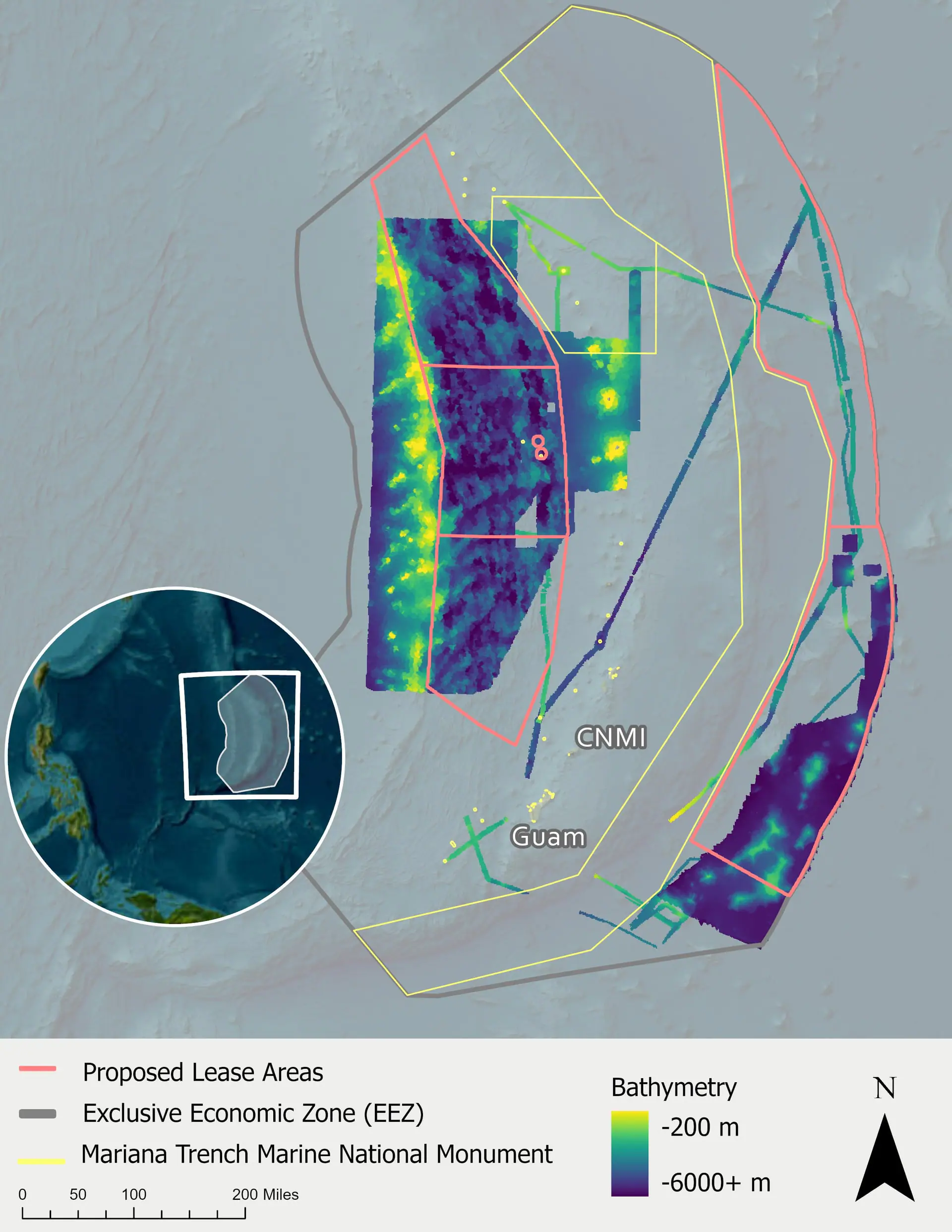
The tests used five sites of different depths near Japan. The shallow reference site was the harbour of JAMSTEC's Yokosuka headquarters (2–6 m). The deep sites were off Misaki Port (757 m), off Hatsushima Island (855 m), Myojin Knoll (1,292 m) and the Kuroshio Extension Observatory (5,503 m). The Hatsushima site lies near cold seeps and the Myojin Knoll site near hydrothermal vents. The 5,503 m site lies south of the Kuroshio Extension recirculation gyre, where large amounts of plastic debris have been reported.
- Harbour of JAMSTEC Yokosuka headquarters (2–6 m)
- Off Misaki Port (757 m)
- Off Hatsushima Island (855 m, near cold seeps)
- Myojin Knoll (1,292 m, near hydrothermal vents)
- Kuroshio Extension Observatory (5,503 m)
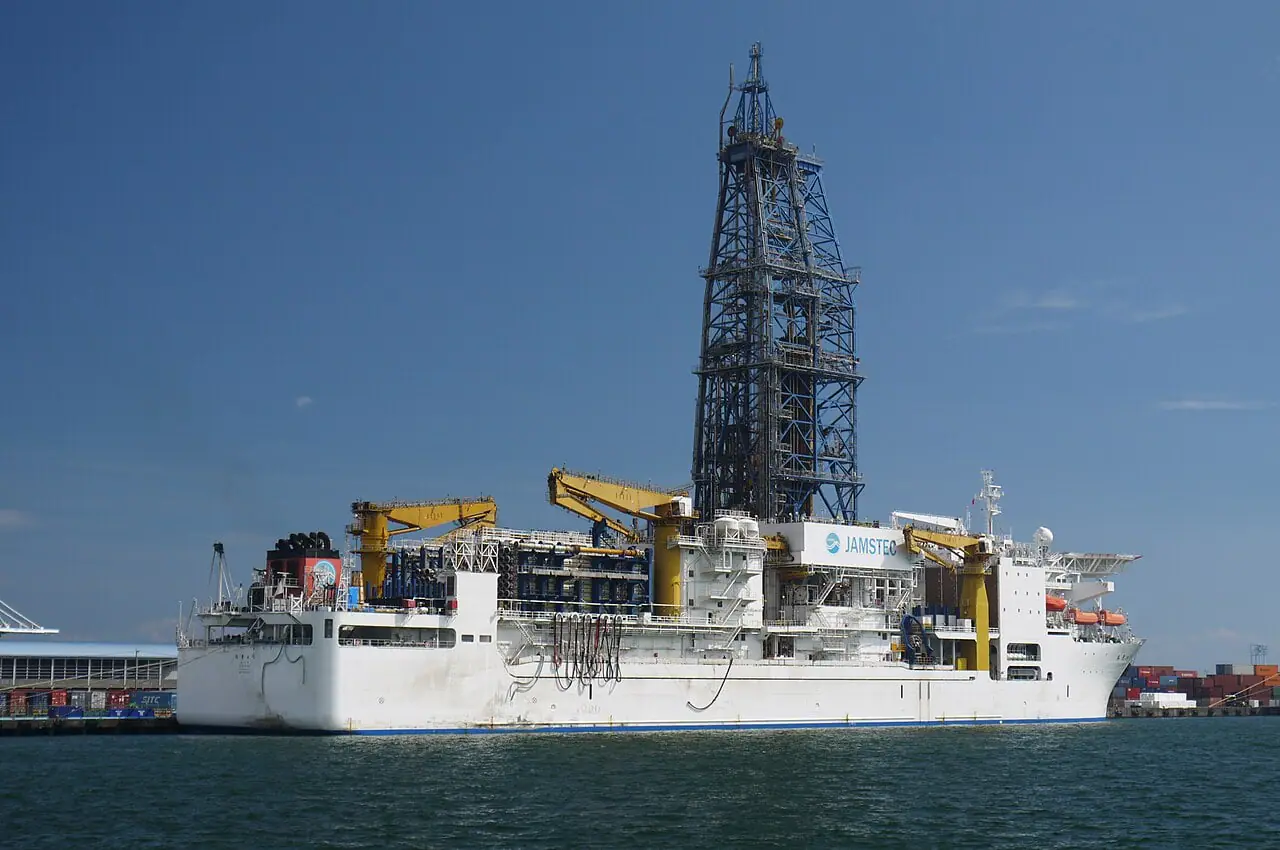
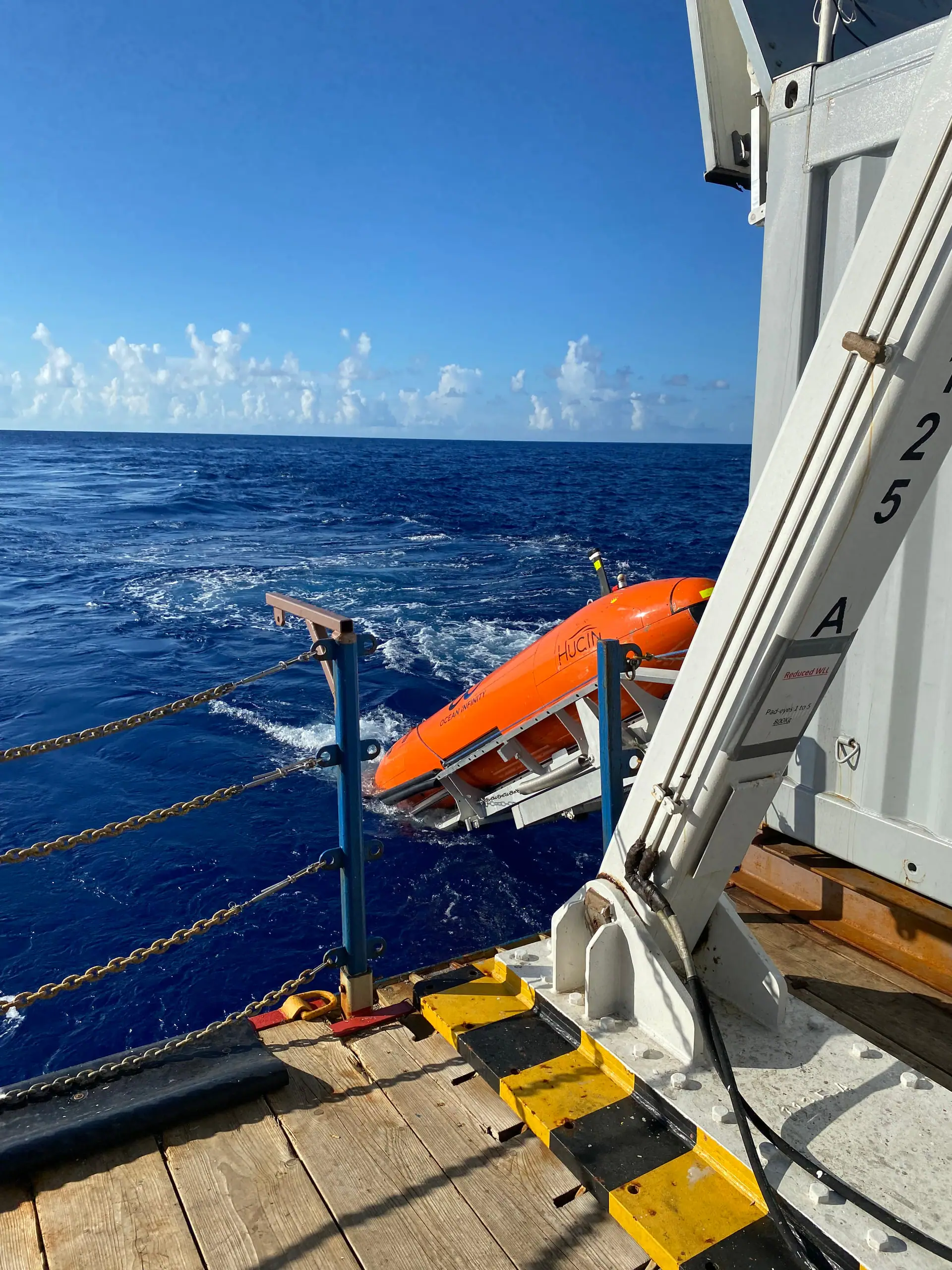
Sample chambers were placed on the deep seafloor and recovered with the robotic arm of the crewed submersible Shinkai 6500 or with remotely operated vehicles (Kaimei-ROV). To account for the lower temperature, high pressure and different microbial activity of the deep sea, the team raised the enzyme loading from 0.1 wt% in the harbour to 3 wt% in the deep sea.
How much of the films was left after five months?
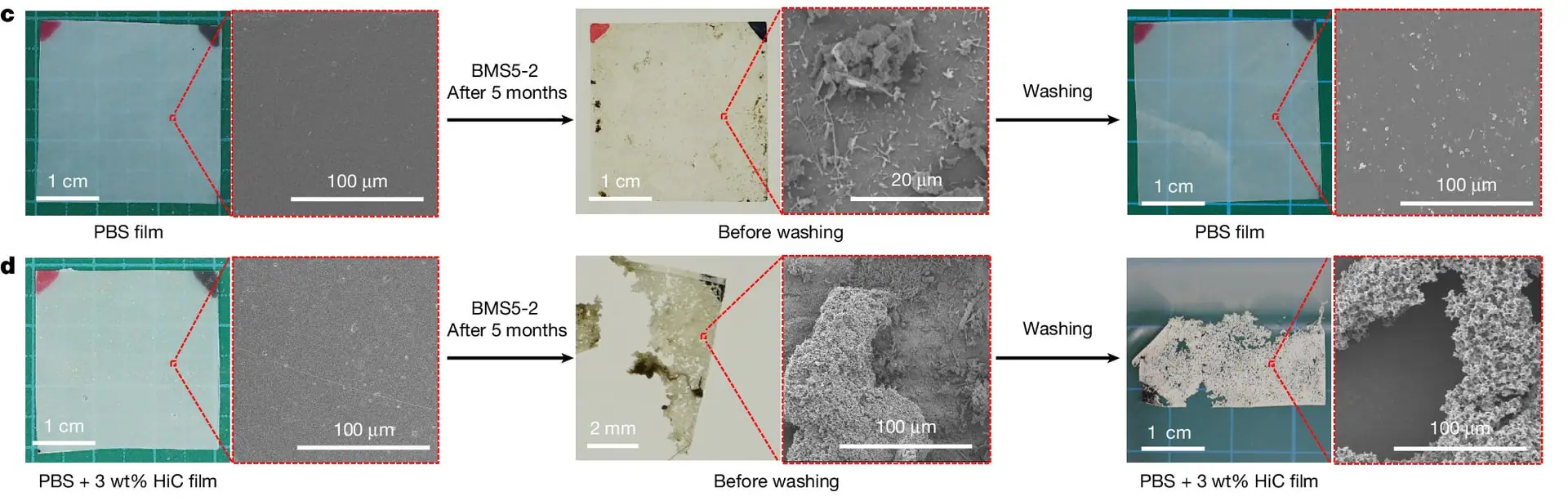
After five months at 757 m off Misaki, films containing 3 wt% of the enzyme HiC and enzyme-free films behaved very differently. The table below lists the mass losses given as numbers in Fig. 3a of the paper, arranged by the editors.
| Material | Enzyme-free | With 3 wt% HiC |
|---|---|---|
| PBS | 1.2% | 97.3% |
| PBSA | 3.4% | 100.0% |
| PCL | 2.5% | 100.0% |
| PBAT | 1.1% | 12.1% |
For PBS, the HiC-embedded film lost 97.0 μg per cm² per day, far more than the 0.9 μg of the enzyme-free film. Microbes had colonized the enzyme-free PBS film too, but electron microscopy showed no sign of surface erosion. The paper suggests that, at least under the tested deep-sea conditions, the biofilms did not contribute to degrading these materials. Even after losing almost all its mass, what remained of the HiC-embedded PBS film kept a continuous film-like form and an unchanged molecular mass. The paper takes this as evidence that the film did not simply crumble and fall through the mesh, but was broken down around the embedded enzyme, releasing small molecules into the seawater.
PBAT, by contrast, lost only 12.1% even with the enzyme. PBAT contains a rigid aromatic component (terephthalic acid units) that resists enzymatic attack. Still, this was more than the 1.1% lost by enzyme-free PBAT.
The microbeads showed the same pattern: after five months, HiC-embedded PBS beads were riddled with holes. HiC-embedded PBSA beads had either degraded completely or broken into particles small enough to pass through the 55 μm mesh; the two cannot be told apart.
What was different on the seafloor at 5,503 m?
In a test where films containing 3 wt% of the other enzyme, CaLB, were left for 18 months, PBSA lost 57.3% and PCL 99.0% at 757 m, whereas at the 5,503 m site PBSA lost 30.5% and PCL only 7.7%. The same enzyme-free films lost 1.6% and 3.4%. The paper's abstract describes the biodegradation at 5,503 m as "moderate". At Myojin Knoll (1,292 m), near hydrothermal vents, mass losses were large and variable, the paper notes. In the paper's comparison, degradation rates were generally fastest in the harbour, then at 757 m, then at 5,503 m. HiC was also shown to be more active than CaLB. The HiC results in the previous section and the CaLB results here are therefore not a comparison of depth alone.
To check that the enzyme works under high pressure, the team also soaked films for one month in enzyme dissolved in seawater at 4 °C inside a pressure vessel. The pressures were 0.1 MPa (atmospheric), 10 MPa (equivalent to 1,000 m depth) and 25 MPa (equivalent to 2,500 m); 25 MPa means about 255 kg pressing on each square centimetre, roughly a fingertip. The enzyme kept working at 25 MPa, but degradation decreased for PBSA above 10 MPa and for PCL at 25 MPa. Slower degradation at deeper sites is consistent with this result, and the paper attributes it to reduced mobility of the polymer chains under high pressure and partial changes in enzyme activity.
For CaLB-embedded PCL films at 757 m, longer deployment meant more degradation: they lost 39.7% after five months and 99.0% after 18 months. The result shows that the embedded enzyme remained active during long immersion on the deep seafloor.
What did the shallow-water and practical tests show?
In the harbour, even a tiny loading of 0.1 wt% HiC clearly sped up degradation. In one month, PBS lost 27.4%, PBSA 100% and PCL 85.5%. Enzyme-free PBS, PBSA and PBAT lost less than 3.0%, but enzyme-free PCL lost 23.4%. In a 25 °C laboratory test with harbour seawater that measured whether microbes turned the breakdown products into carbon dioxide (biochemical oxygen demand), oxygen consumption by HiC-embedded PBS reached 50.9% of the theoretical value within a month. That is close to the 59.3% of the cellulose used for comparison and far above the 4.7% of enzyme-free PBS, supporting breakdown all the way to carbon dioxide. Conversion to carbon dioxide was not measured on the deep seafloor.
In tests of practical performance, PBS, PBSA and PCL films with 0.1 wt% of enzyme had almost the same tensile strength as enzyme-free films (PBAT was tested at 0.5 wt% and 3 wt%). At 3 wt%, strength and elongation decreased, but the paper says they remained within a practically usable range. The team is now exploring applications such as fishing lines and fishing nets.
How should the claim of near-complete degradation in the deep sea be read?
The press release's statement that the plastics degraded almost completely in the deep sea within five months refers to PBS, PBSA and PCL with 3 wt% HiC at 757 m off Misaki. Within the same paper, CaLB-embedded PCL lost less than a tenth of its mass in 18 months at 5,503 m, and PBAT, with its aromatic component, lost only about a tenth even with HiC at 757 m. The plastics do not vanish at the same speed throughout the deep sea, a point that is easy to miss from the headline alone.
The first challenge the paper names is cost: adding enzyme raises the price of biodegradable plastics that are already expensive. Overall environmental sustainability also depends on degradation rate, greenhouse gas emissions and end-of-life management, so better marine biodegradability alone does not guarantee it, in the paper's view. Because samples were placed on and recovered from seafloors of different depths with crewed submersibles such as Shinkai 6500, the differences between sites could be measured. The hydrothermal area of Myojin Knoll also appears in our article on two new peanut worm species from deep-sea vents and other habitats.