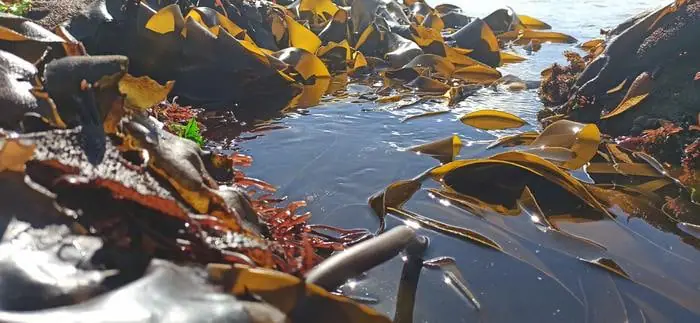
The kelp Laminaria pallida, a large brown seaweed that grows along the Atlantic coasts of South Africa and Namibia, shifts towards reproducing without fertilisation when no mating partner is nearby. A team led by the Max Planck Institute for Biology Tübingen in Germany reported the finding in the journal PLOS Biology on 12 November 2026. The ability to produce offspring not only from unfertilised eggs but also from male gametes was widespread in wild populations, yet the 523 wild individuals analysed showed no clear trace of plants produced this way.
How do kelps normally reproduce?
Kelps alternate between two generations that look nothing alike: large "sporophytes" that can reach several metres in length, and microscopic, filamentous "gametophytes". Male gametophytes release small, swimming sperm, and when one fertilises a large, immobile egg produced by a female gametophyte, the zygote grows into a new sporophyte. The kelp forests we see along the shore are made of these sporophytes.
Development of an unfertilised egg into a sporophyte, known as parthenogenesis, has long been known in many kelp species. The resulting "parthenosporophytes" are often misshapen and grow poorly. In Laminaria pallida, a study published in 2024 had shown that gametes of both sexes can start development without fertilisation. The new study asked how often this happens and what controls the switch, both in the laboratory and in the wild.
The paper's first author is Daniel Liesner of the Max Planck Institute for Biology Tübingen, and the team included researchers from Namibia, South Africa and France.
Can a seaweed grow from a male gamete?
In all four male gametophyte lines, sporophytes began to grow without fertilisation. They came not from ordinary small sperm but from male gametes that had enlarged and taken on an egg-like form. The team cultured four male lines and one female line separately and observed that the transition, in which enlarged gametes are released and head towards parthenogenesis, began between days 6 and 27. Microscope observations confirmed that the male parthenosporophytes came from individual gametes rather than directly from the body of the gametophyte.
By day 40, the share of male gametophytes that had made this transition ranged from 4.22 ± 1.13% to 27.72 ± 1.71%, depending on the line. The highest rate was not statistically different from the rate of female parthenogenesis.
Sexual reproduction was still far more productive. Growing males and females together yielded more than twice as many sporophytes as parthenogenesis alone, with an average of one embryo per gametophyte.
| Comparison | Sexual reproduction (fertilisation) | Parthenogenesis (no fertilisation) |
|---|---|---|
| Number of sporophytes | More than twice as many as parthenogenesis alone | Fewer |
| Shape after 31 weeks | Holdfast, stipe and blade all formed | Malformed blades, holdfast and stipe sometimes incomplete |
| Size | Larger | Significantly smaller |
| Chromosomes | Both sex chromosomes | Only one sex chromosome, with endoreduplication in every individual tested |
| Reproductive structures | – | Not formed in the lab after three attempts |
Parthenosporophytes could be kept growing for several months, but after 31 weeks they were clearly smaller and more irregular than sporophytes from fertilisation, and every one tested had undergone "endoreduplication", copying its nuclear DNA without dividing the cell.
How did gene activity change?
As parthenosporophytes developed from male gametes, the activity of male-biased genes dropped sharply. The paper calls this "de-masculinisation" of the transcriptome. As a result, the gene activity of male parthenosporophytes came to resemble that of female parthenosporophytes and of embryos grown from fertilised eggs.
The team analysed 98 RNA sequencing libraries and showed that male and female parthenogenesis and sexual development converged on similar patterns as they became sporophytes. They did not become identical, however: genes involved in the life cycle and large groups of co-expressed genes showed distinct patterns along each route, which the paper suggests means the routes remain molecularly distinct.
In the model brown alga Ectocarpus, two transcription factors called SAMSARA and OUROBOROS control the switch from gametophyte to sporophyte. Laminaria pallida has related genes, but they were expressed throughout development rather than rising at the moment of the switch. Where the trigger for parthenogenesis lies remains unknown.
Does wild Laminaria pallida reproduce asexually?
In the wild populations, the team found no clear sign of individuals produced asexually. In February and March 2022 they sampled tissue from 393 individuals at Paternoster in South Africa and 180 at Swakopmund in Namibia, across areas ranging from a few metres to several hundred metres apart. They analysed the 523 individuals for which at least 8 of the 10 genetic markers (microsatellites) used in the analysis could be read.
| Site | Individuals analysed | Finding |
|---|---|---|
| Paternoster (South Africa) | 357 | No deviation from random mating in inbreeding coefficient or linkage disequilibrium |
| Swakopmund (Namibia) | 166 | Inbreeding coefficient consistent with random mating; weak but significant deviation only in the linkage disequilibrium test |
An individual that developed parthenogenetically from a gamete would be homozygous at every marker, and clonal reproduction would leave several individuals with the same genotype, but neither turned up.
The ability to reproduce asexually is nevertheless still present in the wild populations. When the team cultured 31 female and 28 male gametophytes from the sampled plants, 92% of those that matured produced parthenosporophytes, after excluding six that never became reproductive and a few lost to contamination. The capacity exists, but it rarely shows up among adult plants in the field.
How does a kelp sense a partner?
The mere presence of a partner reduced parthenogenesis. Using the two male lines with the highest parthenogenesis rates and the female line, the team divided dishes with a 5 µm mesh and placed males on one side and females on the other. With a partner present, both males and females showed clearly less parthenogenesis. On day 6, females also released 2.61 ± 0.39 eggs per individual when males were absent, compared with 1.75 ± 0.12 when males were present.
The paper suggests that some diffusible signal conveys the presence of a mate and refers to a "yet undescribed mate-recognition mechanism". The news release suggests a chemical signal may be involved, but its identity has not been determined. The paper acknowledges that it cannot fully exclude some sperm slipping through the mesh, but concludes from the abnormal shape of the sporophytes and other features that they arose through parthenogenesis.
In a comment provided with the news release, the authors described this flexibility as follows.
Our findings show that kelps have much greater flexibility in how they reproduce than previously appreciated. Remarkably, even male gametes can develop into new individuals without fertilisation, providing a potential reproductive backup when mating partners are scarce. This flexibility may help kelp populations persist under challenging environmental conditions.
— The study's authors (from the PLOS news release)
Editor's note: what "not found in the wild" means
Both the paper and the news release conclude that there is no evidence of asexual reproduction in wild populations. The paper adds, however, that only the Swakopmund population in Namibia showed a weak deviation in the linkage disequilibrium test, which could reflect cryptic clonality. Whether this is related to local environmental conditions remains unclear.
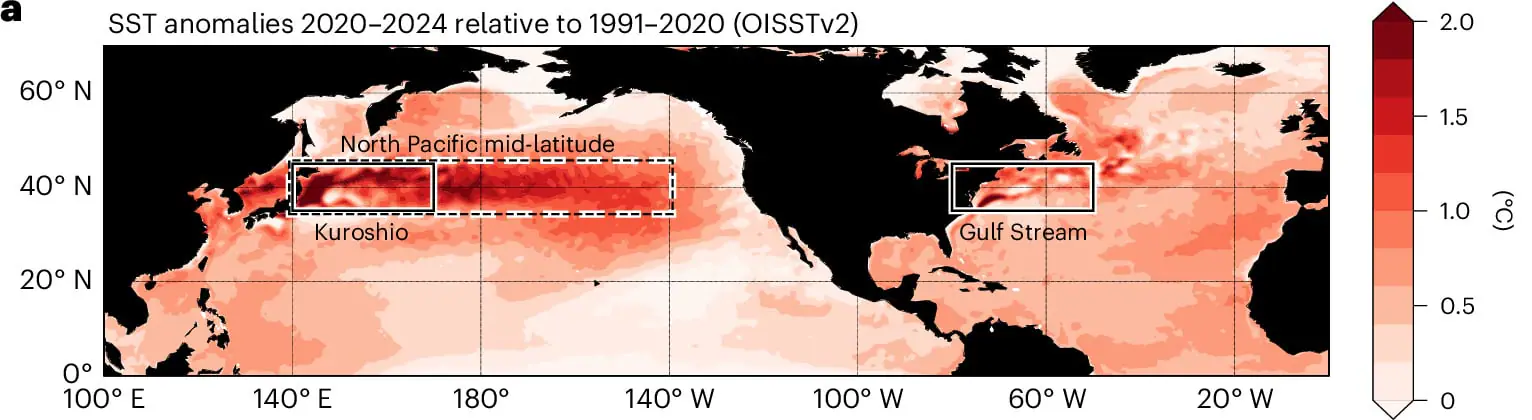
Summer sea surface temperatures at Swakopmund reach 20 °C and above, well over the 12 °C at which reproduction of Laminaria pallida gametophytes is optimal. Citing earlier work, the paper regards 20 °C as a threshold that likely impairs growth and reproduction. The species' northernmost population, at Rocky Point in Namibia, has persisted since it was first documented in 1970. Whether asexual reproduction becomes more important towards the edge of the range was not tested in this study, and the team says it warrants further investigation.
The culture results also need careful reading. The 92% figure refers to mature gametophytes grown alone, not to how often asexual reproduction happens in the sea. In addition, in observations of the laboratory lines, most parthenosporophytes developed only after the main period of gamete release, and the team suggests this timing may limit interference with sexual reproduction.
The paper considers the results relevant to protecting, restoring and cultivating kelp forests in a changing ocean. However, neither the signal used to sense a partner nor the genes that flip the switch to parthenogenesis have been identified yet, and for the genes, the paper says future studies will be required.