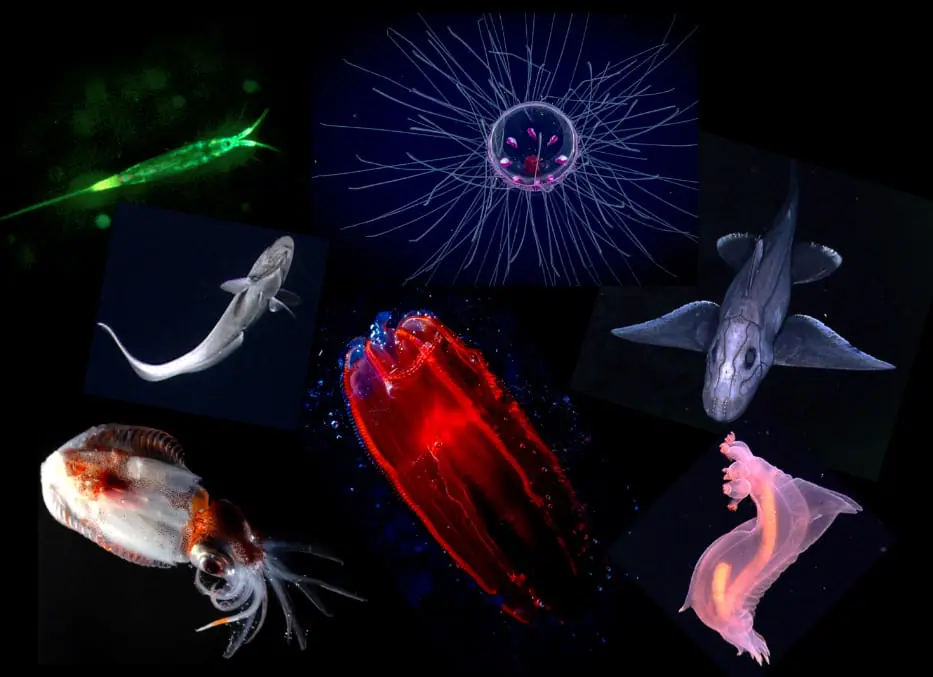
Even in the deep sea, where sunlight barely reaches, small lights flicker here and there. This is bioluminescence, light that living things make themselves. NOAA Ocean Exploration, part of the U.S. National Oceanic and Atmospheric Administration (NOAA), explains that bioluminescence is rare on land but very common in the ocean. Some 80% of the animals living in the water column between 200 and 1,000 m are bioluminescent, and they glow in different ways and for different purposes.
How do bioluminescence and fluorescence work
Living things appear to glow mainly in three ways, and the first is bioluminescence, which makes light through a chemical reaction, just as fireflies do. The second, fluorescence, absorbs light that hits it and gives it off again as a different colour, like a blacklight poster. The third, phosphorescence, is similar to fluorescence but keeps glowing long after the light shining on it is gone. Fluorescence and phosphorescence re-emit light that comes from outside.
Bioluminescence is usually blue, because blue light travels farthest through water. It can range from nearly violet to green-yellow, and very occasionally red. Every bioluminescent organism makes light through a reaction between an enzyme and a substrate, but the chemicals used differ from species to species. NOAA explains that this suggests the ability to make light may have evolved independently many times.
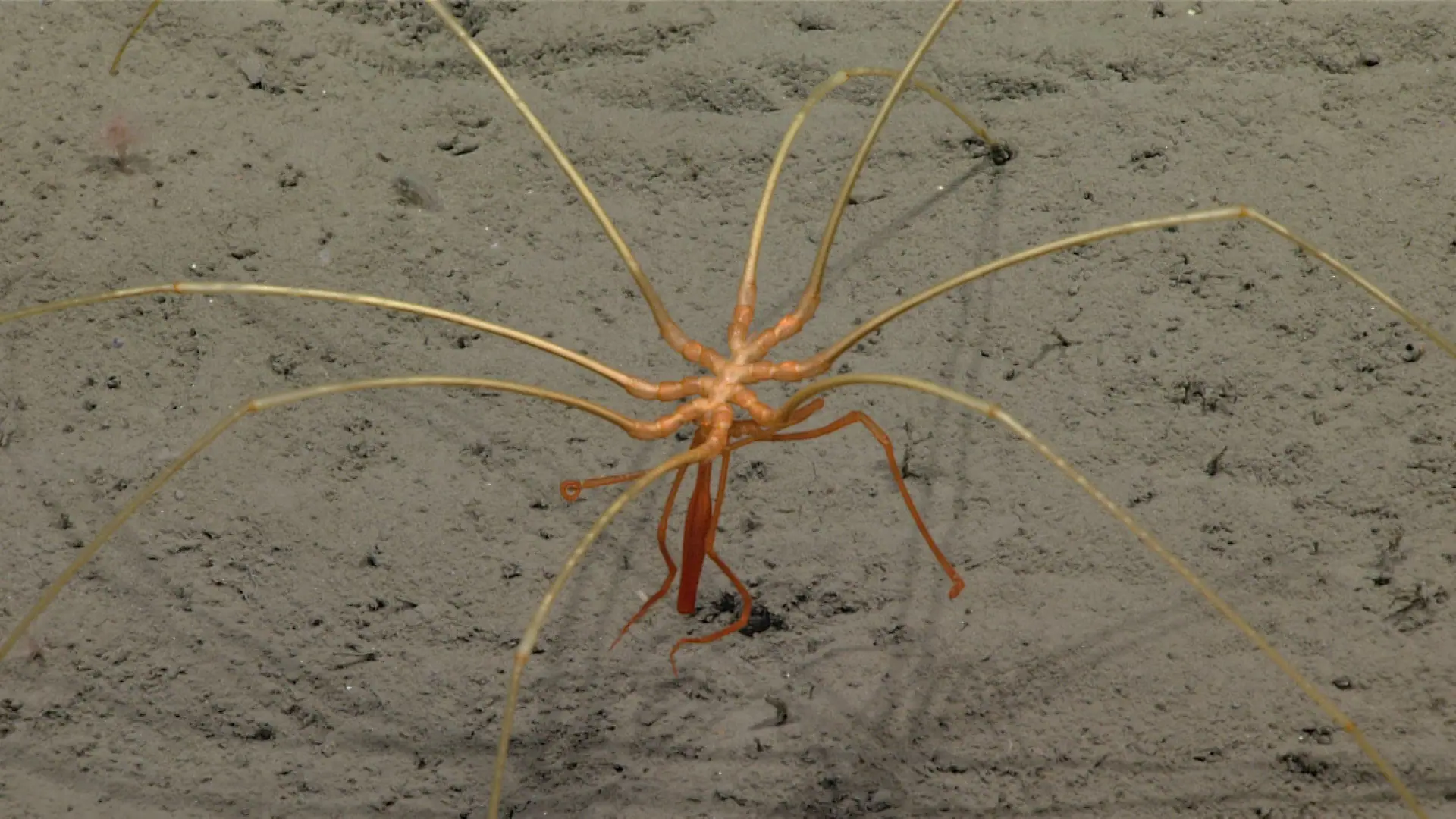
The bristles on this crab's mouthparts glow, but this is not light the crab makes itself. It is fluorescence, light that hits it given off again as another colour. In general, NOAA sees fluorescence in organisms on the deep seafloor as more a by-product of their tissue chemistry, less likely to have a particular role. The photo caption does not say whether this applies to this crab.
Which animals use light for defence
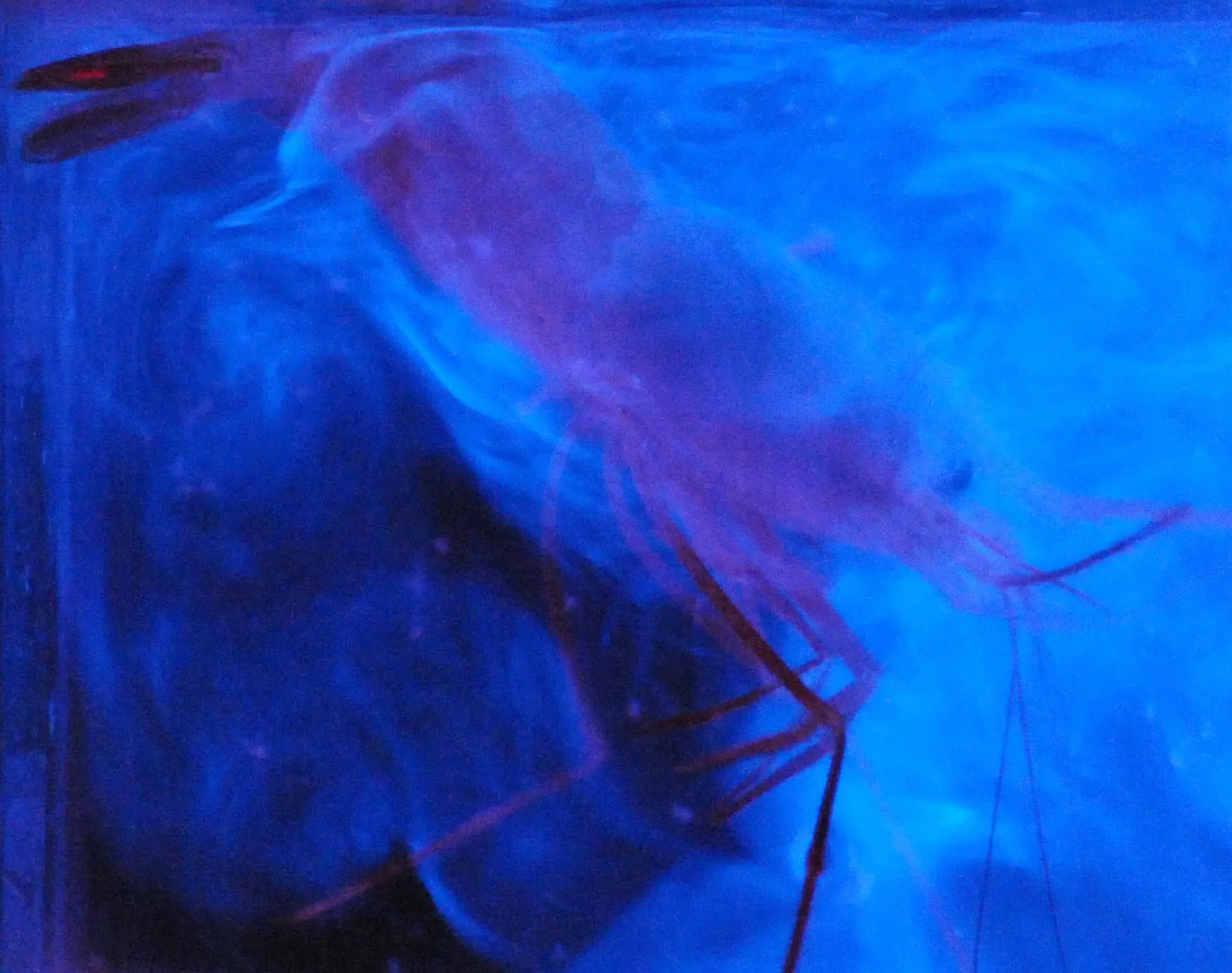
The shrimp in the main image is spewing glowing fluid. NOAA's photo caption says most bioluminescence seems to occur only when an animal is touched. It is thought to protect animals by blinding or startling an opponent, or by distracting it with a glowing body part that breaks off. Another idea is that the light attracts animals that eat the opponent.
Other animals use glowing fluid too. On a 2021 expedition in the North Atlantic, a worm of the genus Swima was seen swimming. It was potentially Swima bombiviridis, known in English as the green bomber worm, which can release a glowing green "bomb" when disturbed to distract predators and escape.
Sea pens standing on the seafloor glow too. The left photo shows one as it looked in place, and the right shows the light the same animal gave off. In the right photo, the glowing parts are the bluish-white bands; the caption does not say why the body appears red.
Which fish use light to lure prey
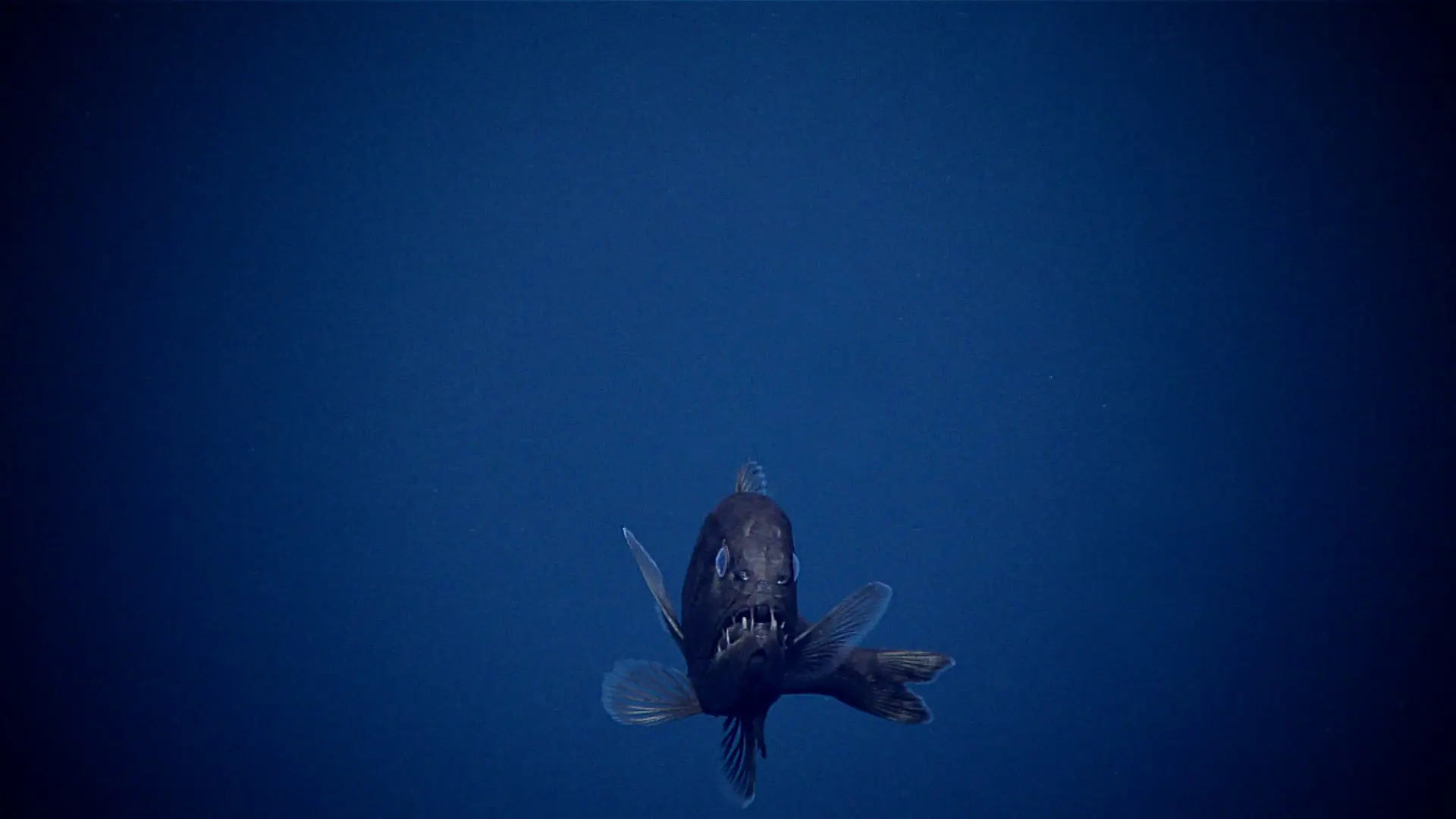
Sloane's viperfish (Chauliodus sloani) is known for the photophores along its belly and for a long, extended dorsal fin ray that it uses as a lure. This one was photographed at 701 m in Papahānaumokuākea in 2025. It is a rare photo in which the gelatinous coat around its body is still intact.
According to NOAA's video description, Melanostomias melanops attracts prey with a glowing "fishing lure" dangling from its chin, along with parallel rows of photophores along its body. This fish is found throughout the North Atlantic at depths of 50 to 1,500 m. Large adults of its family (Stomiidae) often spend time very close to the seafloor.
What is the squid with glowing arm tips
A Dana octopus squid (Taningia danae) that followed the exploration vehicle for much of its descent at the far western edge of the Clipperton Fracture Zone in the central Pacific has bioluminescent "spotlights" on the tips of two of its arms. The photo caption does not say what it uses these spotlights for.
Are there eyes made for seeing light
Where there are animals that make light, there are also animals that look for it. This fish, known in English as a grideye fish, has eyes reshaped into flat plates, which are thought to serve mainly for spotting the bioluminescence of potential prey.
Even so, NOAA writes that the main purpose of bioluminescence is still not well understood. Part of the problem is that these animals are hard to observe. Bright lights can make them flee and may permanently damage light-sensitive eyes. Deep Sea Log has also covered the link between colour and light in deep-sea animals in a story about a comb jelly that looks rainbow-coloured and its red belly. For fish of the middle depths, see also our story on the genes of deep-sea fish and shrimp in the Gulf of Mexico.